


















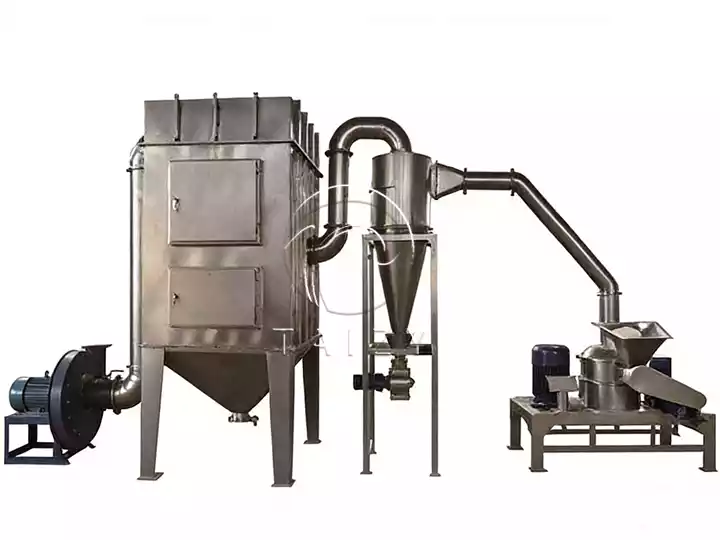
Серия WFJ сверхтонных измельчителей сочетает высокоскоростное резание с технологией воздушной классификации. Может обрабатывать различные материалы в однородные порошки от 80 до 450 меш, некоторые материалы достигают микронного уровня тонкости 10–25μm.
Вся система имеет конструкцию с воздушной классификацией, исключая необходимость использования сеток или решеток. Тонкость порошка регулируется скоростью классификационного импеллера. Производительность варьируется от 20 до 1500 кг/ч, в зависимости от модели. Широко используется для ультратонкого измельчения в пищевой, фармацевтической, химической и новых материалах.
Применение сверхтонкого измельчителя
Ультратонкая мельница в основном предназначена для тонкого измельчения и микронезации различных материалов, с широким спектром применения, включая:
- Пищевая промышленность: специи, мука, приправы, порошки из овощей, растительные экстракты и др.
- Фармацевтическая промышленность: традиционные китайские лекарственные материалы, растительные экстракты, лекарственные порошки и др.
- Химическая промышленность: порошки смол, пигменты, красители, порошки химического сырья.
- Сельскохозяйственная переработка: измельчение бобовых, кормов и растительных волокон.
- Другие материалы: минеральные порошки, волокнистые материалы и различные сухие вещества.
Этот сверхтонкий измельчитель подходит для производственных сценариев, требующих равномерных тонких порошков, и обеспечивает непрерывное промышленное производство.
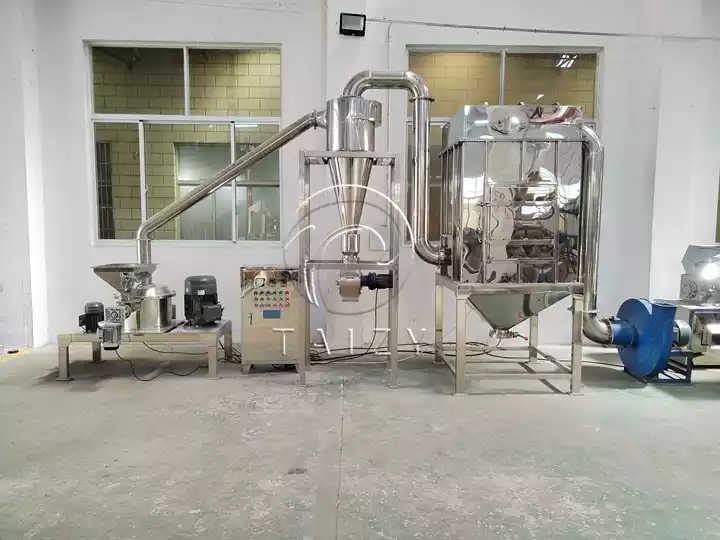
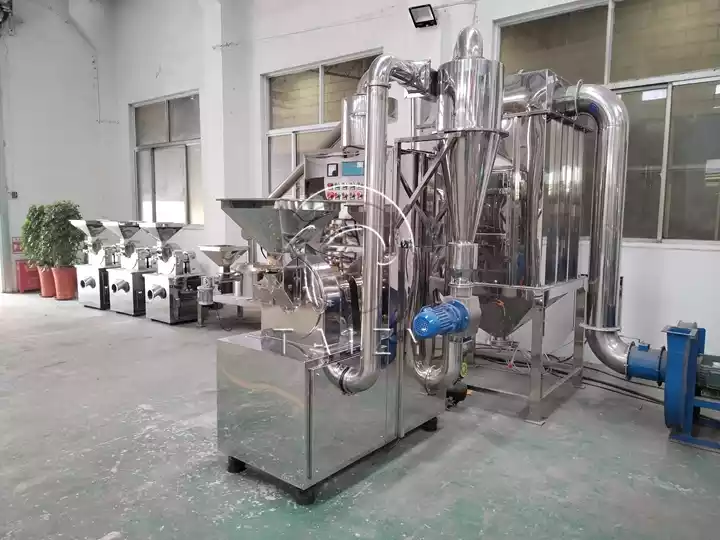
Производительность ультратонной мельницы
- Регулируемая степень помола: сверхтонкий измельчитель контролирует размер частиц с помощью центробежной системы классификации, с настройкой тонкости от 80 до 450 меш.
- Непрерывное производство: вся установка использует автоматизированные системы транспортировки и пневматической транспортировки с отрицательным давлением, что обеспечивает непрерывную подачу и выгрузку для повышения эффективности производства.
- Однородный размер частиц: технология воздушной классификации обеспечивает стабильное и равномерное распределение частиц в конечном продукте, повышая его качество.
- Универсальная обработка материалов: специально разработана для измельчения различных материалов, включая пищевые ингредиенты, химические соединения, волокнистые вещества и традиционные китайские лекарственные травы.
Ключевые особенности сверхтонного измельчителя
- Безэкрана: имеет конструкцию с воздушной классификационной структурой без традиционных сеток, что исключает засорение и упрощает обслуживание оборудования.
- Высокая эффективность, низкое энергопотребление: сочетает высокоскоростные вращающиеся лезвия с воздушной классификацией для повышения эффективности измельчения при снижении энергозатрат.
- Соответствует стандартам GMP: вся установка спроектирована в соответствии со стандартами GMP с отличной герметизацией конструкции. Производит минимальную пыль во время работы, подходит для фармацевтической и пищевой промышленности.
- Высокая автоматизация: установка включает основной блок, вспомогательное оборудование и систему электроснабжения, что обеспечивает простоту эксплуатации и стабильное управление.
- Компактный след: оборудование обладает компактной структурой и гибкой установкой, позволяя регулировать расположение в зависимости от условий завода.
- Легкое обслуживание: ключевые компоненты изготовлены из износостойких материалов, обеспечивая стабильную работу и длительный срок службы.
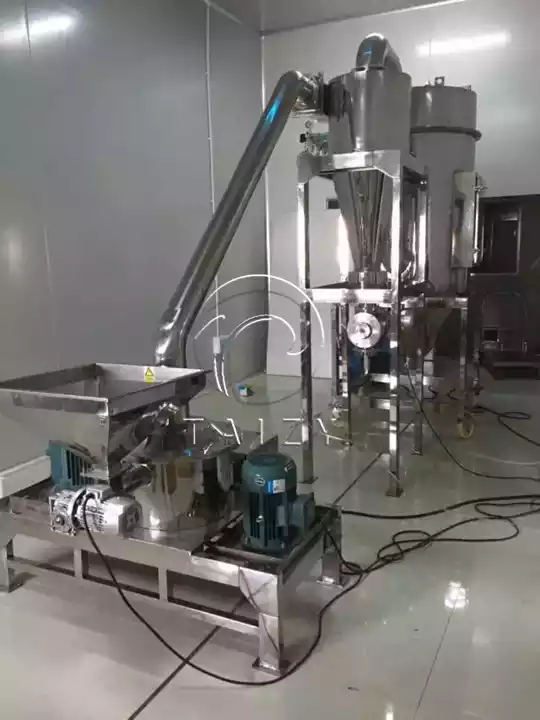
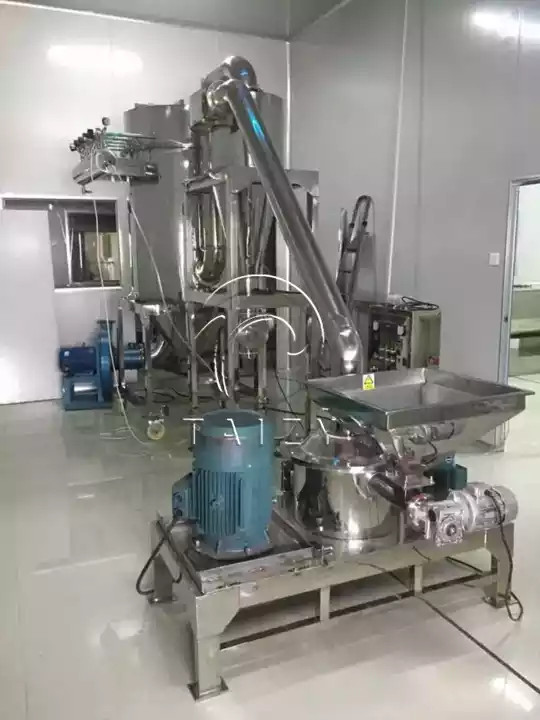
Структура и принцип работы сверхтонного измельчителя
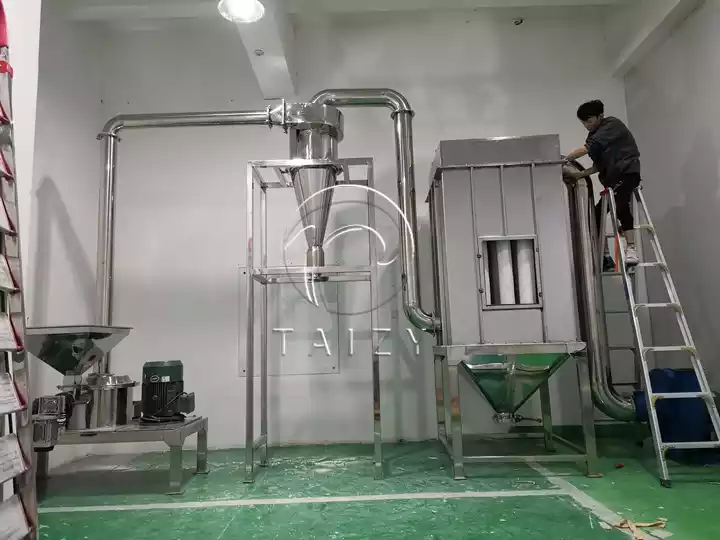
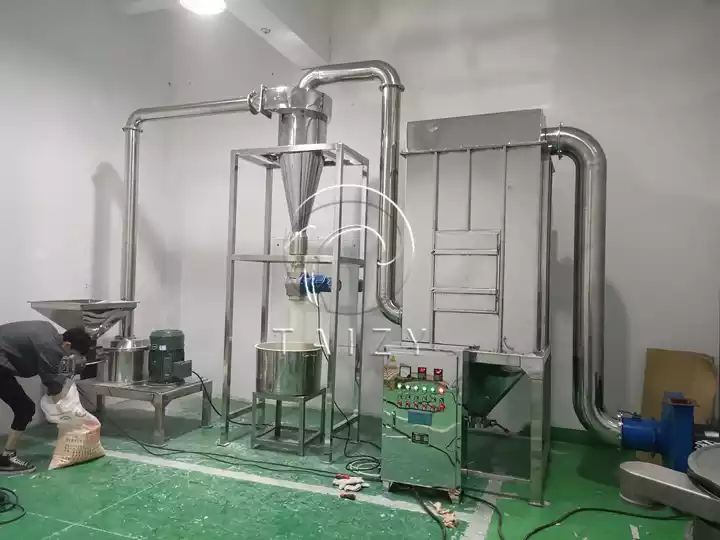
Модуль ультратонкого измельчения состоит из следующих компонентов: основной блок, устройство классификации, циклонный сепаратор, мешковый фильтр, вентилятор высокого давления, система транспортных трубопроводов и система электроснабжения.
Эти системы работают в совокупности, образуя полный процесс измельчения, классификации и сбора.
- Материал поступает в оборудование через бункер и подается винтовым питателем в камеру измельчения. Под действием высокоскоростных вращающихся лезвий происходит резание, удар и трение для достижения измельчения.
- Затем измельченный материал поступает в зону классификации, где происходит отбор по размеру частиц с помощью вращающегося классификационного колеса.
- Более крупные частицы выбрасываются обратно в камеру измельчения с помощью центробежной силы для дальнейшего измельчения, а частицы, соответствующие требуемой тонкости, засасываются в циклонный сепаратор с помощью отрицательного давления для предварительного сбора.
- Далее происходит вторичное разделение через мешковый фильтр, в результате получается порошок однородной тонкости.
Тонкость продукции регулируется путем изменения скорости вращения колесо классификации — при более высокой скорости получается более тонкий порошок.
А vacuum food packaging machine can be integrated downstream based on the specific product type.
Технические характеристики ультратонкого порошкового измельчителя
| Модель | Производственная мощность (кг/ч) | Скорость шпинделя (об/мин) | Размер подачи (мм) | Тонкость продукции (меш) | Общая мощность (кВт) | Вес (кг) | Общие размеры (мм) |
|---|---|---|---|---|---|---|---|
| WFJ-8 | 20–120 | 6800 | <8 | 80–450 | 11 | 1000 | 6000×1050×2650 |
| WFJ-15 | 50–200 | 6000 | <10 | 80–450 | 18.5 | 1300 | 7000×1200×2900 |
| WFJ-20 | 80–300 | 4800 | <10 | 80–450 | 25 | 1700 | 8000×1350×3300 |
| WFJ-30 | 100–800 | 3800 | <15 | 80–450 | 46 | 2300 | 9200×1500×3800 |
| WFJ-60 | 200–1200 | 2800 | <18 | 80–450 | 84.15 | 3200 | 10500×2300×4530 |
| WFJ-80 | 500–1500 | 2400 | <20 | 80–450 | 100.4 | 3800 | 12000×2500×4800 |
Часто задаваемые вопросы
Насколько мелко может измельчать ультратонкая мельница?
Готовый размер частиц регулируется от 80 до 450 меш, некоторые материалы достигают 10–25μm.
Для каких материалов подходит машина?
Используется для ультратонкого измельчения сухих материалов, таких как пища, специи, китайские травы, химическое сырье и растительные волокна.
Необходимо ли менять сетки для контроля тонкости?
Нет. Он использует структуру воздушной классификации без сетки, и тонкость регулируется путем изменения скорости классификатора.
Выделяет ли он много пыли во время производства?
Нет. Оснащена системой транспортировки с отрицательным давлением, циклонным сепаратором и мешковым фильтром, что обеспечивает низкую пыльность и соответствует экологическим стандартам.
Какова производительность?
Выход варьируется от 20 до 1500 кг/ч для различных моделей, подходит для лабораторных и крупномасштабных производств.
Сложно ли обслуживать машину?
Простая структура, износостойкие части. Требуются только регулярные проверки лезвий и подшипников, низкие затраты на обслуживание.