


















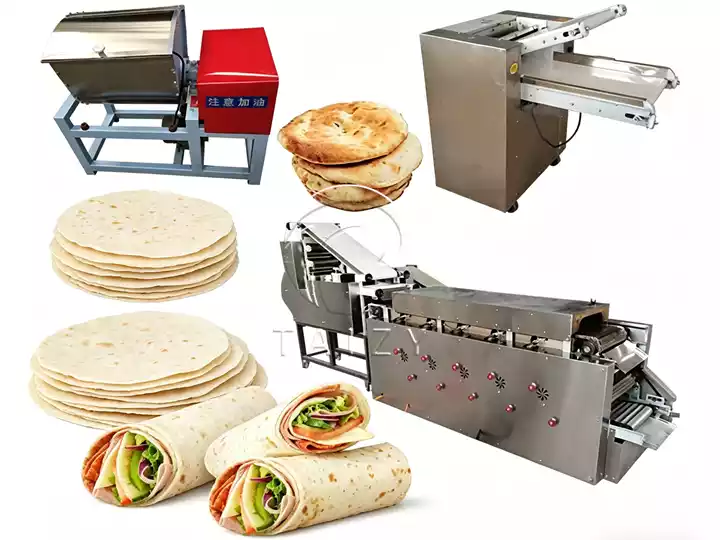
เครื่องทำขนมปังพิท่าอาหรับเป็นสายการผลิตอัตโนมัติที่ออกแบบมาสำหรับการผลิตขนมปังพิท่า ขนมปังแบนอาหรับ ทอร์ติญ่า ข้าวโพด และชาปาตีในปริมาณมาก มันรวมการผสมแป้ง การรีด การขึ้นรูป และการอบเข้าด้วยกันในระบบเดียว ความสามารถในการผลิตของสายนี้อยู่ระหว่าง 100–500 กก./ชม. หรือ 500–2,000 ชิ้น/ชม.
มันสนับสนุนการผลิตสเปคผลิตภัณฑ์ที่หลากหลาย รวมถึงเส้นผ่านศูนย์กลาง 30–40 ซม. และขนาด 30 × 25 ซม. ขนาดและรูปทรงสามารถปรับแต่งได้อย่างยืดหยุ่นเพื่อตอบสนองความต้องการเฉพาะ และความหนาสามารถปรับได้ (1–6 มม.).
อุปกรณ์ทำจากสแตนเลส 304 เกรดอาหารและมีระบบอบที่ใช้ไฟฟ้าหรือแก๊ส ซึ่งช่วยลดต้นทุนแรงงานได้อย่างมาก (ต้องการเพียง 1–2 คน) เป็นตัวเลือกที่เหมาะสำหรับโรงงานแปรรูปอาหารและธุรกิจเบเกอรี่ที่ต้องการอัปเกรดไปสู่การผลิตอัตโนมัติ.
ข้อดีของเครื่องทำขนมปังพิท่า
- สายการผลิตอัตโนมัติเต็มรูปแบบ ลดต้นทุนแรงงาน.
- สแตนเลส 304 เกรดอาหาร รับประกันความปลอดภัย สุขอนามัย และความต้านทานการกัดกร่อน.
- เข้ากันได้กับส่วนผสมที่หลากหลาย (แป้งสาลี แป้งข้าวโพด แป้งสาลีทั้งเมล็ด ฯลฯ).
- แม่พิมพ์ที่สามารถเปลี่ยนได้สนับสนุนการผลิตรูปทรงและขนาดที่หลากหลาย.
- ความหนาและความเร็วของสายพานลำเลียงที่ปรับได้ช่วยให้ควบคุมคุณภาพผลิตภัณฑ์ได้อย่างยืดหยุ่น.
- การให้ความร้อนด้วยไฟฟ้าหรือแก๊สที่เลือกได้ช่วยลดต้นทุนพลังงาน.
- ผลผลิตที่มีประสิทธิภาพสูง เหมาะสำหรับการผลิตอุตสาหกรรมต่อเนื่อง.
การใช้งานของเครื่องทำชาปาตี
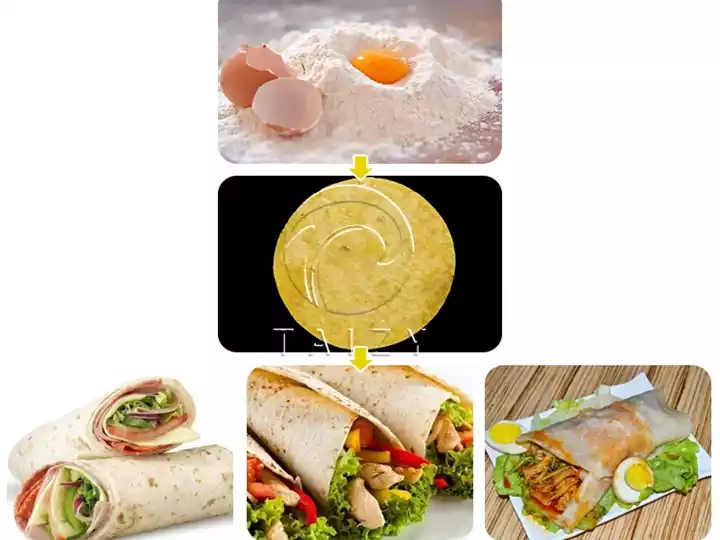
- การผลิตขนมปังพิท่าในปริมาณมาก
- สายการประมวลผลทอร์ติญ่า
- การผลิตชาปาตี
- การประมวลผลขนมปังแบนสไตล์ตะวันออกกลางและเมดิเตอร์เรเนียน
- โรงงานแปรรูปอาหารที่ทำจากแป้งและครัวกลาง
- บริษัทส่งออกอาหารและการประมวลผลห่วงโซ่เย็น
สเปคของเครื่องทำขนมปังพิท่า
| รายการ | สเปค |
|---|---|
| รุ่น | TZ-300 |
| กำลังไฟฟ้า | 2.2 กิโลวัตต์ |
| ขนาดเครื่อง | 1700 × 680 × 1110 มม. |
| น้ำหนัก | 300 กก. |
| ขนาดขนมปัง | สูงสุด 40 ซม. |
| ช่วงความหนา | 1–6 มม. (ปรับได้) |
| ความเร็วของสายพานลำเลียง | ปรับได้ |
| วัสดุ | สแตนเลสเกรดอาหาร |
| ความจุ | 100–500 กก./ชม. หรือ 500–2000 ชิ้น/ชม. |
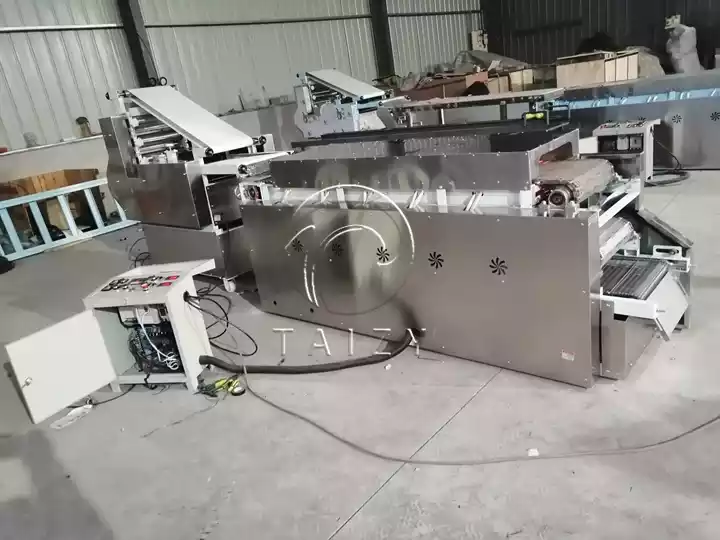
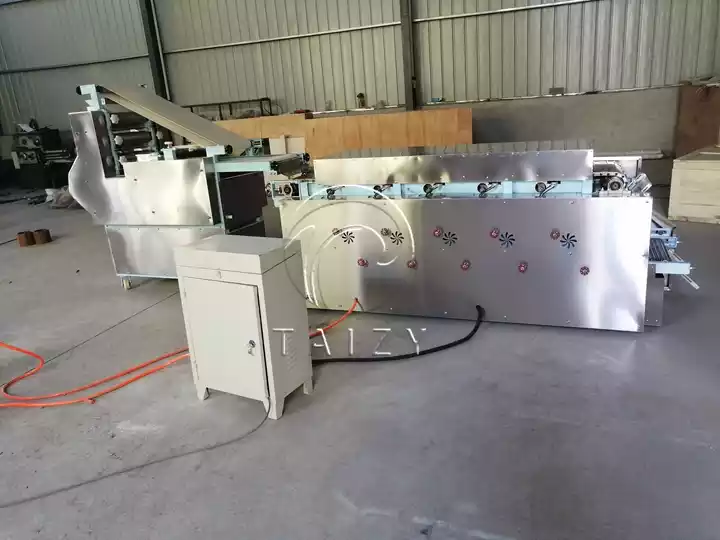
กระบวนการผลิตและการทำงาน
การผสมแป้ง
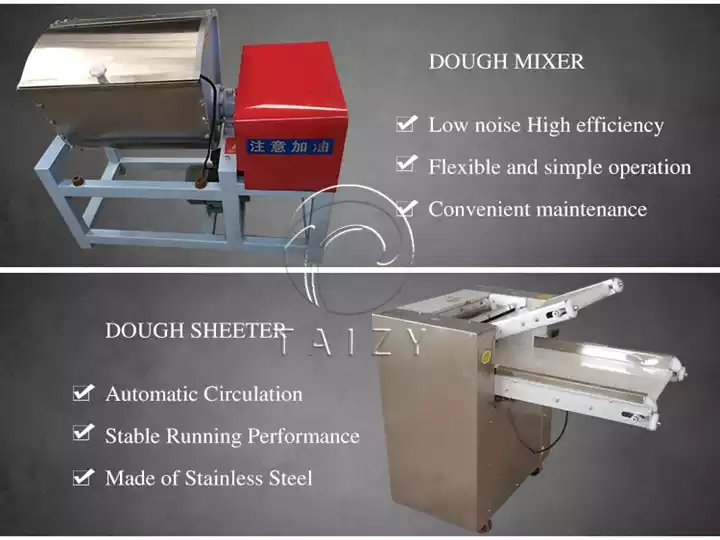
แป้ง น้ำ และส่วนผสมอื่น ๆ จะถูกเพิ่มลงในเครื่องผสมแป้งในสัดส่วนที่ถูกต้อง การผสมความเร็วสูงจะรวมส่วนผสมเข้าด้วยกันอย่างทั่วถึงเพื่อสร้างแป้งที่มีความยืดหยุ่นและความแข็งแรงของกลูเตนดี การผสมอย่างต่อเนื่องช่วยปรับปรุงความสม่ำเสมอของแป้ง วางรากฐานสำหรับการขึ้นรูปและการขยายในภายหลัง.
การรีดแป้ง
เมื่อแป้งเข้าสู่เครื่องรีดแป้ง มันจะถูกรีดผ่านลูกกลิ้งหลายครั้ง กระบวนการนี้ทำให้โครงสร้างแป้งแน่นขึ้นและพื้นผิวเรียบขึ้น ในขณะที่เสริมสร้างเครือข่ายกลูเตนเพื่อเพิ่มความหนึบและชั้นเนื้อสัมผัสของผลิตภัณฑ์ที่เสร็จสมบูรณ์.
การแบ่งและการขนส่ง
แผ่นแป้งที่รีดแล้วจะถูกขนส่งอย่างสม่ำเสมอและแบ่งออกเป็นส่วนตามสเปคที่ตั้งไว้หรือป้อนอย่างต่อเนื่องไปยังพื้นที่การสร้าง เพื่อให้แน่ใจว่าขนาดผลิตภัณฑ์สม่ำเสมอและเพิ่มมาตรฐานของสินค้าสำเร็จรูป.
การสร้างและการตัด
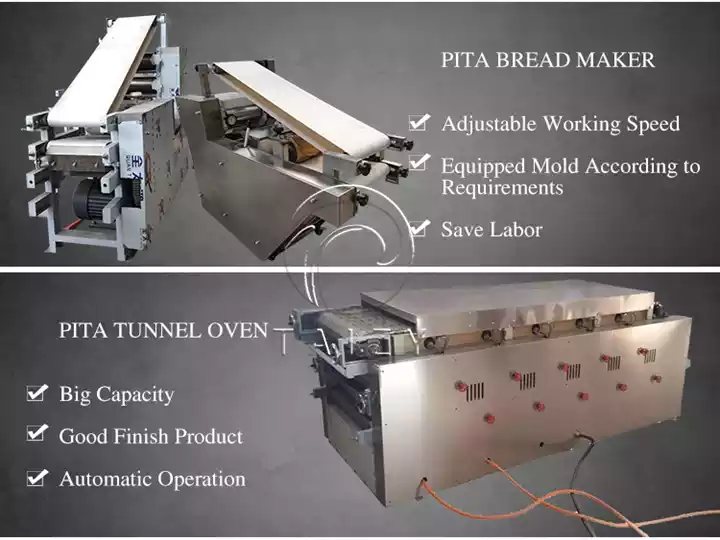
แผ่นแป้งจะเข้าสู่เครื่องสร้างขนมปังอาหรับ ซึ่งจะถูกกดและตัดเป็นรูปทรงโดยอัตโนมัติด้วยแม่พิมพ์ ผลิตสเปคที่หลากหลาย เช่น กลมและสี่เหลี่ยม โดยการเปลี่ยนแม่พิมพ์ ขนาดและรูปทรงของผลิตภัณฑ์สามารถปรับได้อย่างยืดหยุ่นเพื่อตอบสนองความต้องการของตลาดที่หลากหลาย.
การอบ
แป้งที่ถูกสร้างขึ้นจะเข้าสู่อ oven ต่อเนื่องเพื่ออบอย่างรวดเร็วที่อุณหภูมิสูง (โดยทั่วไปประมาณ 280°C) ความชื้นจะระเหยอย่างรวดเร็ว สร้างแรงดันไอน้ำภายในที่ทำให้แป้งพองตัวขึ้นตามธรรมชาติ สร้างโครงสร้างที่เป็นโพรง (รูปทรงคล้ายกระเป๋า) ซึ่งเป็นลักษณะคุณภาพสำคัญของขนมปังอาหรับ.
การทำให้เย็น & การขนส่ง
หลังจากออกจากเตาอบ แป้งจะถูกทำให้เย็นตามธรรมชาติบนสายพานลำเลียงหรือเข้าสู่ระบบทำความเย็นเพื่อลดอุณหภูมิ ซึ่งช่วยรักษารูปร่างของผลิตภัณฑ์และป้องกันการบิดเบือนหรือการติดกัน.
การเก็บรวบรวม & การบรรจุ
ผลิตภัณฑ์ที่ทำให้เย็นแล้วสามารถบรรจุได้ด้วยมือหรือโดยอัตโนมัติตามต้องการ จากนั้นดำเนินการไปยังขั้นตอนการขายหรือการจัดเก็บ ทำให้กระบวนการผลิตอุตสาหกรรมมีประสิทธิภาพและต่อเนื่อง.
คำถามที่พบบ่อย
อุปกรณ์สนับสนุนวิธีการให้ความร้อนอะไรบ้าง?
เครื่องทำขนมปังพิท่าของเราสนับสนุนวิธีการให้ความร้อนสองวิธี: ไฟฟ้าและแก๊ส.
สามารถปรับความหนาของเค้กได้หรือไม่?
ใช่, ช่วงการปรับได้คือ 1–6 มม. โดยมี 2 มม. เป็นความหนาที่ใช้บ่อย.
สามารถผลิตผลิตภัณฑ์ในรูปทรงต่าง ๆ ได้หรือไม่?
ใช่ รูปทรงและขนาดที่แตกต่างกันสามารถทำได้โดยการเปลี่ยนแม่พิมพ์.
ต้องการคนงานกี่คนในการดำเนินงาน?
สายการผลิตทั้งหมดต้องการเพียง 1 ถึง 2 คน.
มีการปรับแต่งได้หรือไม่?
การปรับแต่งได้รับการสนับสนุนสำหรับความจุการผลิต ขนาด แรงดันไฟฟ้า และการกำหนดค่า.
ติดต่อเรา
In addition to this Arabic pita bread making machine production line, we also offer a wide range of flour-based food processing equipment, such as automatic tortilla makers and spring roll wrapper machines.
เครื่องเหล่านี้สามารถตอบสนองความต้องการการผลิตสำหรับขนมปังแบนประเภทต่าง ๆ ช่วยให้คุณสร้างสายผลิตภัณฑ์ที่หลากหลาย โปรดติดต่อเราสำหรับโซลูชันที่กำหนดเองและใบเสนอราคาที่ละเอียดเพื่อทำให้การผลิตอาหารของคุณมีประสิทธิภาพและแข่งขันได้มากขึ้น.